Why We Love to Lose: The Evolution of Extraction Shooter UX
The genius of extraction shooter UX isn't just in making you feel good when you win; it's in making you feel something profound when you lose. That gut-punch of knowing you messed up, that infuriating sigh as your pristine gear vanishes – that’s the secret sauce.
It creates a potent cocktail of anticipation, fear, and ultimate relief that conventional shooters simply can't replicate. The UX isn't about removing friction; it's about artfully managing it to amplify emotion. It's about designing for the very human desire for challenge, for consequence, and for the sheer, unadulterated thrill of just getting out alive.
So, the next time you're meticulously packing your backpack for a raid, or sprinting towards that blinking extraction point, remember: you're not just playing a game. You're participating in a grand experiment in applied psychology, where the greatest UX triumph is making you willingly embrace the delicious agony of potential loss. And isn't that just brilliant?
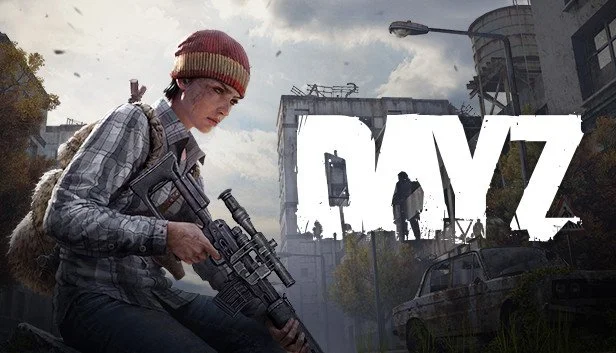
DayZ (The Primordial Chaos)
The Game Design: Pure, unadulterated survival. You are dropped into a massive map with nothing. If you die, you lose hours—sometimes days—of progress.
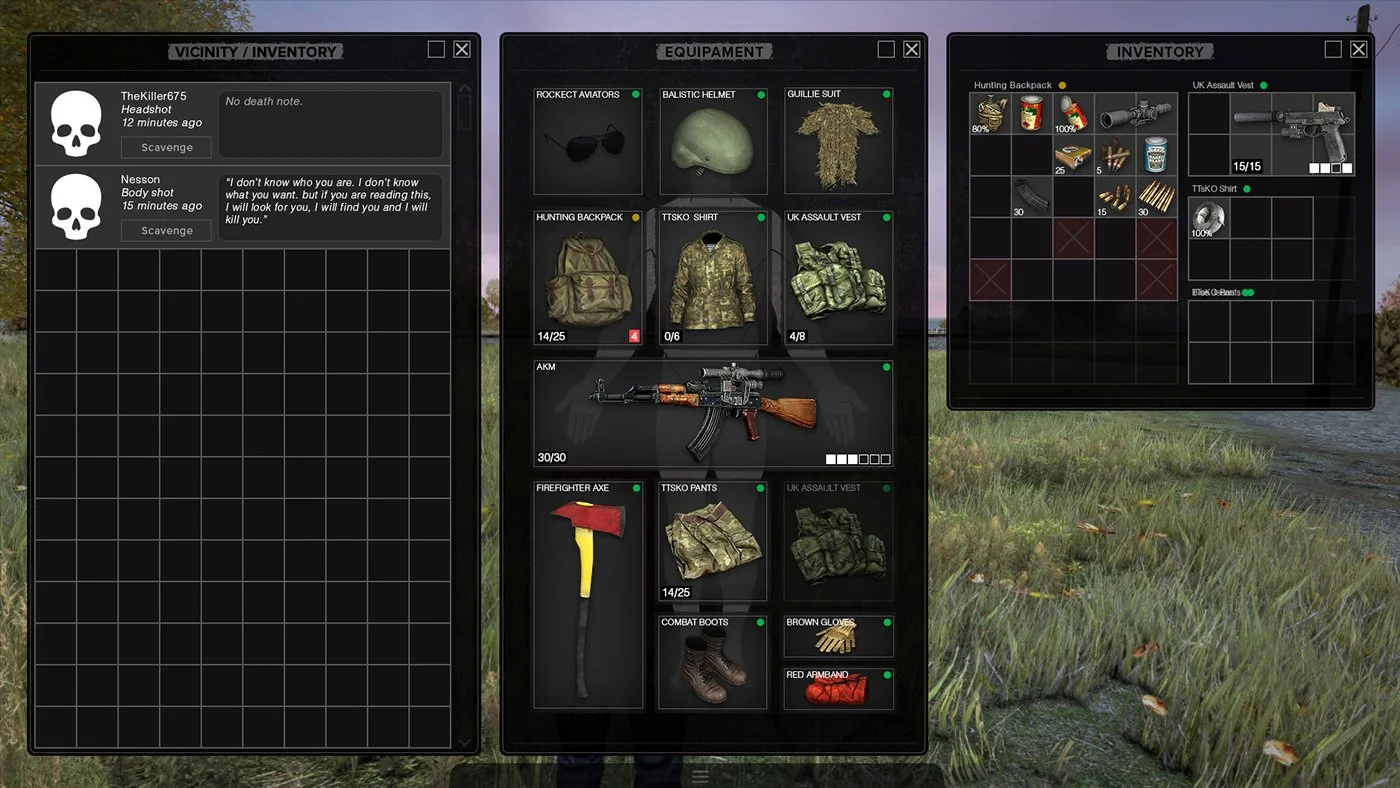
The UX Role: Friction as Immersion. The UX here is famously "bad" by traditional standards.Its UX wasn't designed, it simply emerged from the primordial soup of Arma mods. It was clunky, unintuitive, and brutally unforgiving. It’s clunky and unintuitive. But in this world, that clunkiness represents vulnerability. If it takes you three clicks to open a tin of beans while a zombie is clawing at the door, that frustration is exactly what makes the game feel real. The UX isn't a bridge; it's a hurdle that makes survival feel like a genuine achievement.
Escape from Tarkov (The Spreadsheet of Terror)
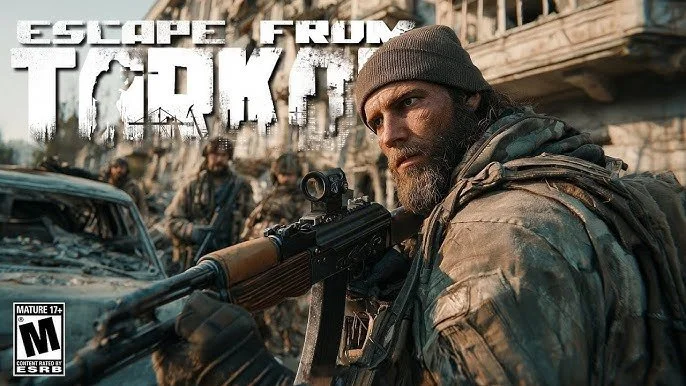
The Game Design: Hardcore military simulation. It introduced the "Hideout" and complex weapon modding. It’s essentially a high-stakes gambling game where your "chips" are expensive rifles.
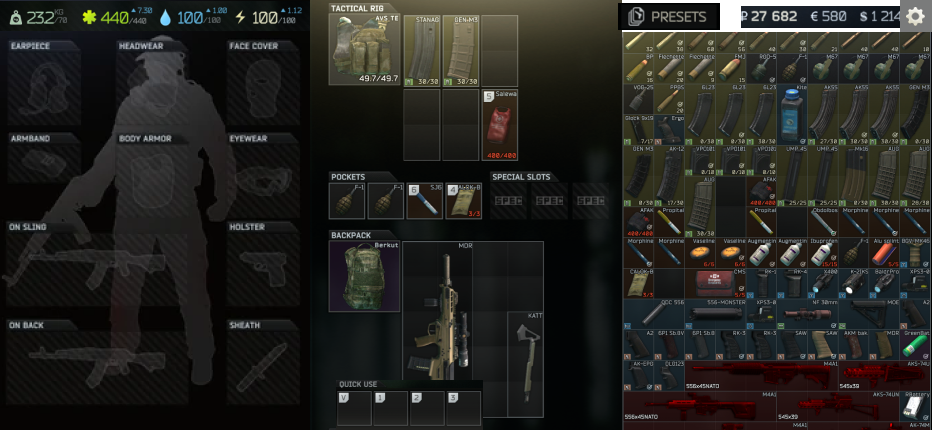
The UX Role: Cognitive Load as Stakes. Tarkov uses a "diegetic" approach—meaning the UI exists within the world. You don't have a magical ammo counter on your screen; you have to manually check your magazine to seehow many bullets are left. The UX forces you to manage a massive amount of information (bullet types, armor classes, hydration). This high cognitive load keeps you in a state of constant, low-level panic, which makes the relief of "extracting" feel like a drug.

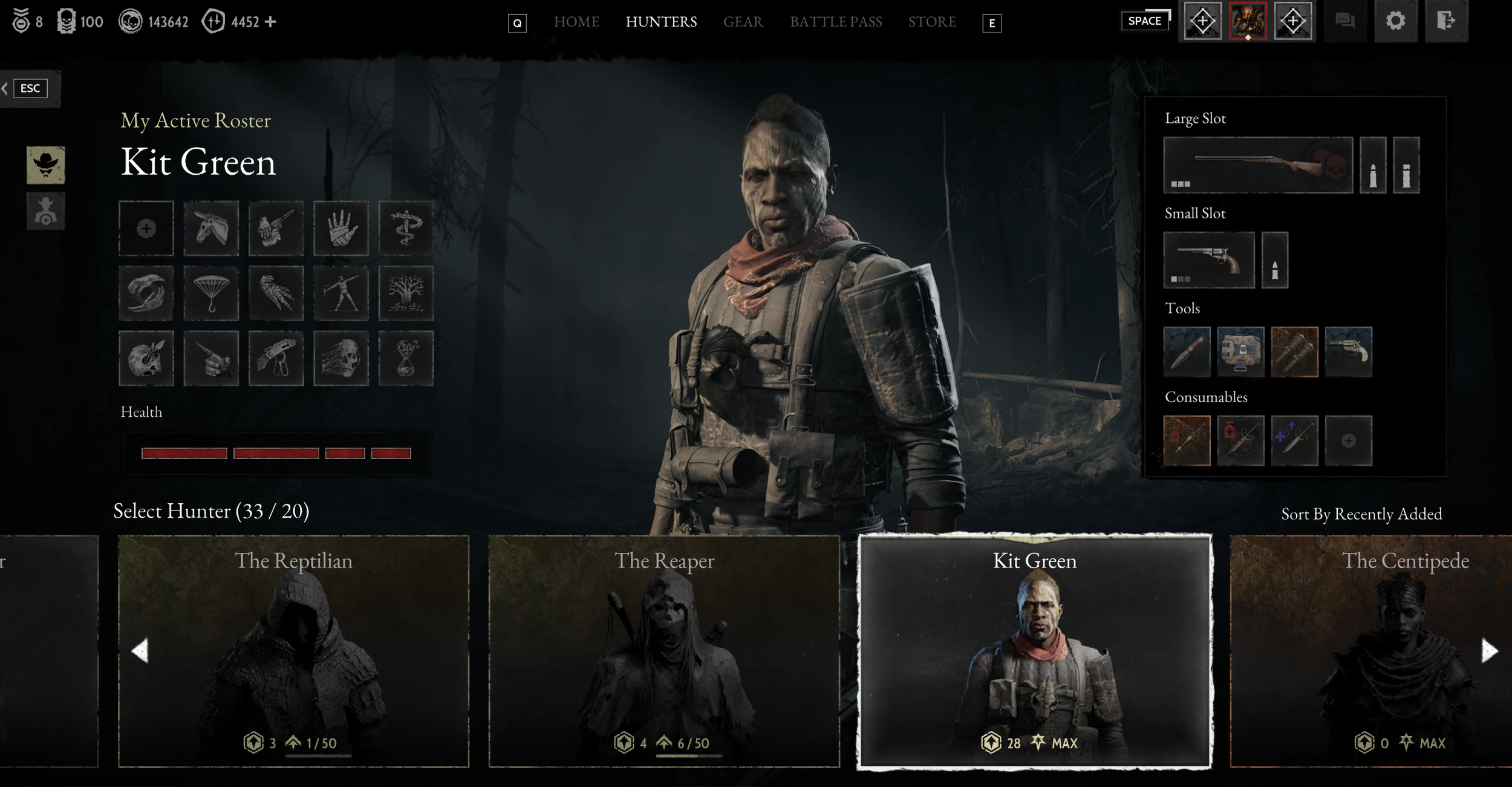
Hunt: Showdown (The Gothic Soundscape)
The Game Design: A "PvPvE" (Player vs Player vs Environment) bounty hunt set in a 1890s swamp. You track a monster, kill it, and try to leave while other players hunt you.
The UX Role: Audio as the Interface. In Hunt, the most important "UI element" isn't on the screen—it’s in your ears. The UX design prioritizes 3D spatial audio. Stepping on a twig or startling a murder of crows is a "UI notification" to every player within 100 meters that you are there. It’s a masterclass in "Invisible UX," where the environment itself tells you everything you need to know, keeping your eyes glued to the swamp, not a mini-map.
Marauders (The Streamlined Space Pirate)
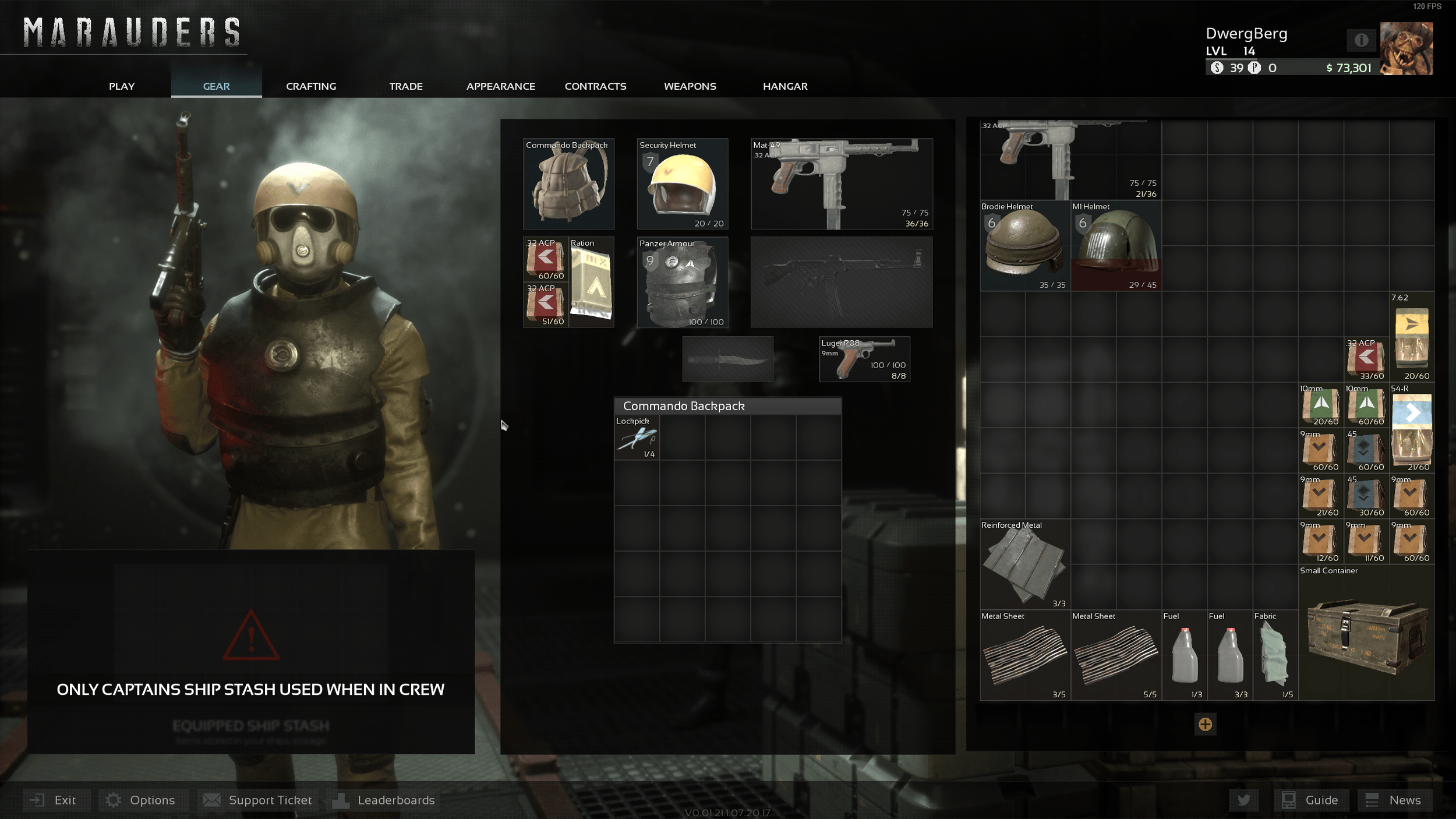
The Game Design: "Diesel-punk" space raiding. You fly a ship, dock with a station, loot it, and get out. It’s faster, punchier, and less "medical simulator" than Tarkov.
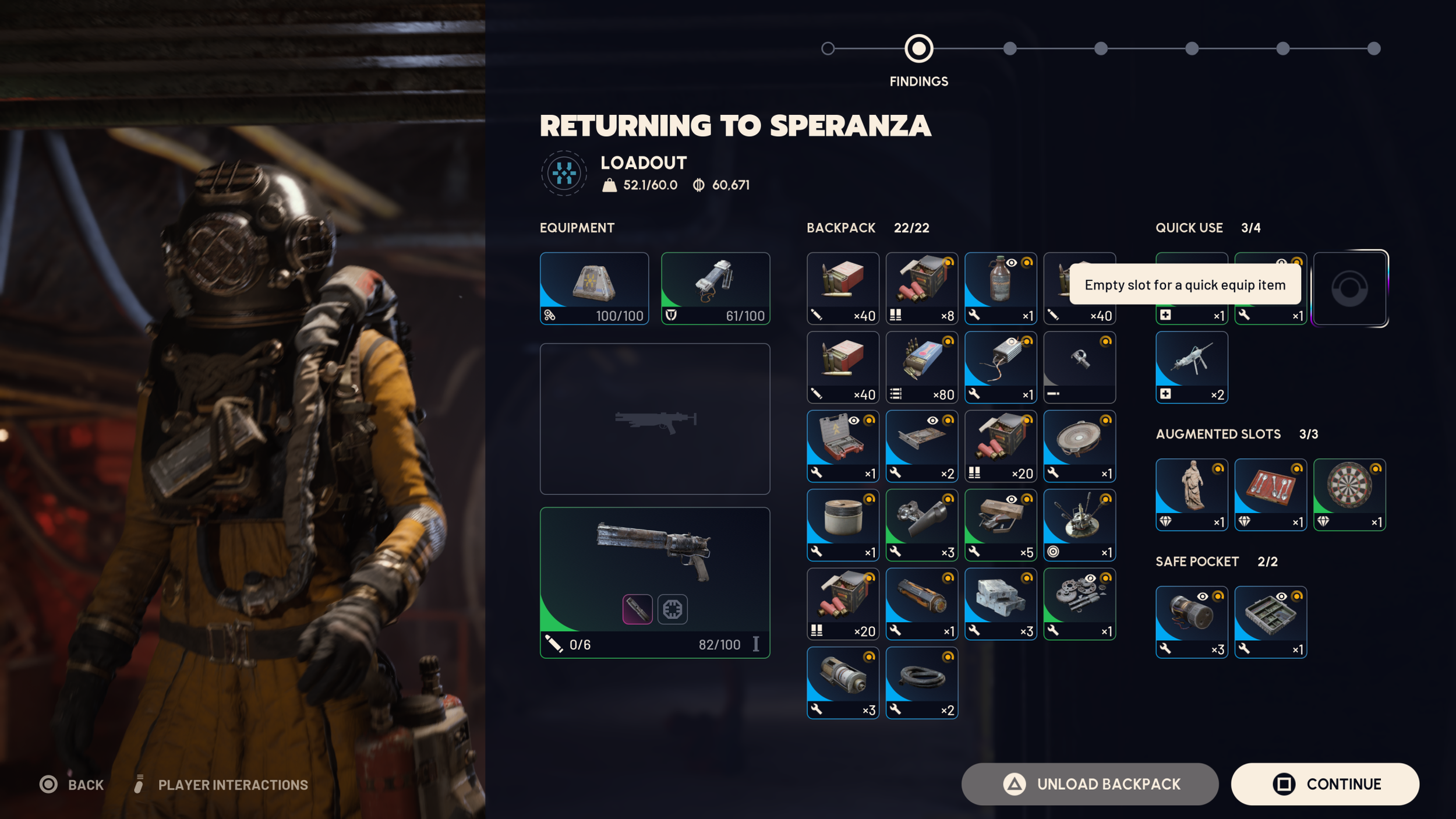
The UX Role: Accessibility without Dilution. Marauders represents the "modern" evolution where designers realized you can have high stakes without the headache. The inventory is cleaner, the crafting is simpler, and the "onboarding" is more intuitive. The UX here acts as a vessel, getting you into the action faster. It proves that the "Extraction" feeling comes from the risk of loss, not necessarily from how hard it is to click a button.
ARC Raiders (The High-Fidelity Adventure)
The Game Design: A vibrant, "post-post-apocalyptic" world where you fight massive, intelligent machines. It’s a 3rd-person extraction shooter that feels more like a high-stakes adventure than a bleak survival horror.
The UX Role: Minimalism & Feedback. ARC Raiders uses a "minimally intrusive" UI to let the gorgeous environments take center stage.
The "Feel" of Movement: The UX focuses heavily on kinetic feedback—the way your character slides, grapples, and parkours feels responsive and empowering, rather than clunky.
Strategic Constraints: Even the "pain" is designed: small stash sizes and limited inventory slots aren't accidents; they are UX choices that force you to make emotional decisions about what to leave behind. It’s about meaningful tension without the overwhelming spreadsheet management of Tarkov.
Conclusion
Whether you are designing a high-stakes banking app or a post-apocalyptic shooter, the goal is the same: Manage the logistics of emotion. Don't just build a tool; build a world where the user's choices actually matter.